Retirement Gives You More Time. What Will You Do With Your Energy?
Wellbeing is not about staying young or turning retirement into a fitness project. It is about having the capacity to keep participating in the life you care about.
Enough strength and energy for the life you want to keep living.
02
Rhythm
Simple routines that make movement, rest and connection easier.
03
Connection
People and activities that help everyday life feel more engaging.
Retirement is often described as finally having more time.
Time to travel.Time to see people.Time to exercise.Time to learn.Time to volunteer.Time to do the things work kept pushing to the edges.
And that is one of the great opportunities of life beyond full-time work.
But there is another question worth asking:
Will you have the energy to enjoy the time you have created?
Because time and energy are not the same thing.
You can have a completely open week and still feel too flat to make much of it. You can have fewer responsibilities and yet somehow find yourself doing less. You can also have a very simple routine and feel strong, engaged and ready for what comes next.
That is why health and wellbeing matter in retirement.
Not because you need to become a different person. Not because retirement should turn into a fitness project. But because the life you want to live depends, at least partly, on having the physical and emotional capacity to live it.
Retirement changes the rhythm of wellbeing
During working life, many habits are built around necessity.
You get up at a certain time because you need to be somewhere
You walk to meetings and move through the day
You leave the house and see people
You eat at roughly predictable times
The working day provides structure
Retirement changes that rhythm. For some people, this creates more space for wellbeing. They exercise more. Sleep improves. Meals become less rushed. There is time to walk, cycle, garden, swim or simply slow down.
For others, the opposite can happen. Less structure can mean more sitting, less incidental movement, irregular sleep, fewer reasons to leave the house, days that drift and good intentions that never quite become habits.
Neither outcome is automatic. Retirement gives you more choice about how wellbeing fits into everyday life.
The goal is not “staying young”
There is a lot of messaging around ageing that suggests the aim is to somehow avoid it. Stay young. Look younger. Defy age.
That is not the NEXTFUL view. Ageing is not a personal failure.
What do I want my body and mind to help me keep doing?
Perhaps you want to:
Travel independently and carry your own luggage
Walk around a new city
Get down on the floor with grandchildren
Play golf, garden, cycle, swim or hike
Keep driving comfortably
Volunteer or work part-time
Live in your own home
Enjoy long lunches with friends
Keep trying new things
Those are lifestyle goals. Health and wellbeing support them. That makes the conversation much more practical.
Strength is really about independence
For many people, the word “strength” sounds like gyms, weights and performance. But strength in later life is much more ordinary than that.
It is being able to:
Carry groceries or lift a suitcase
Get up from a low chair
Climb stairs
Move furniture or garden
Get in and out of a car easily
Keep doing the activities you enjoy
You do not need to become an athlete. The idea is simply to keep enough capability for ordinary life to remain ordinary.
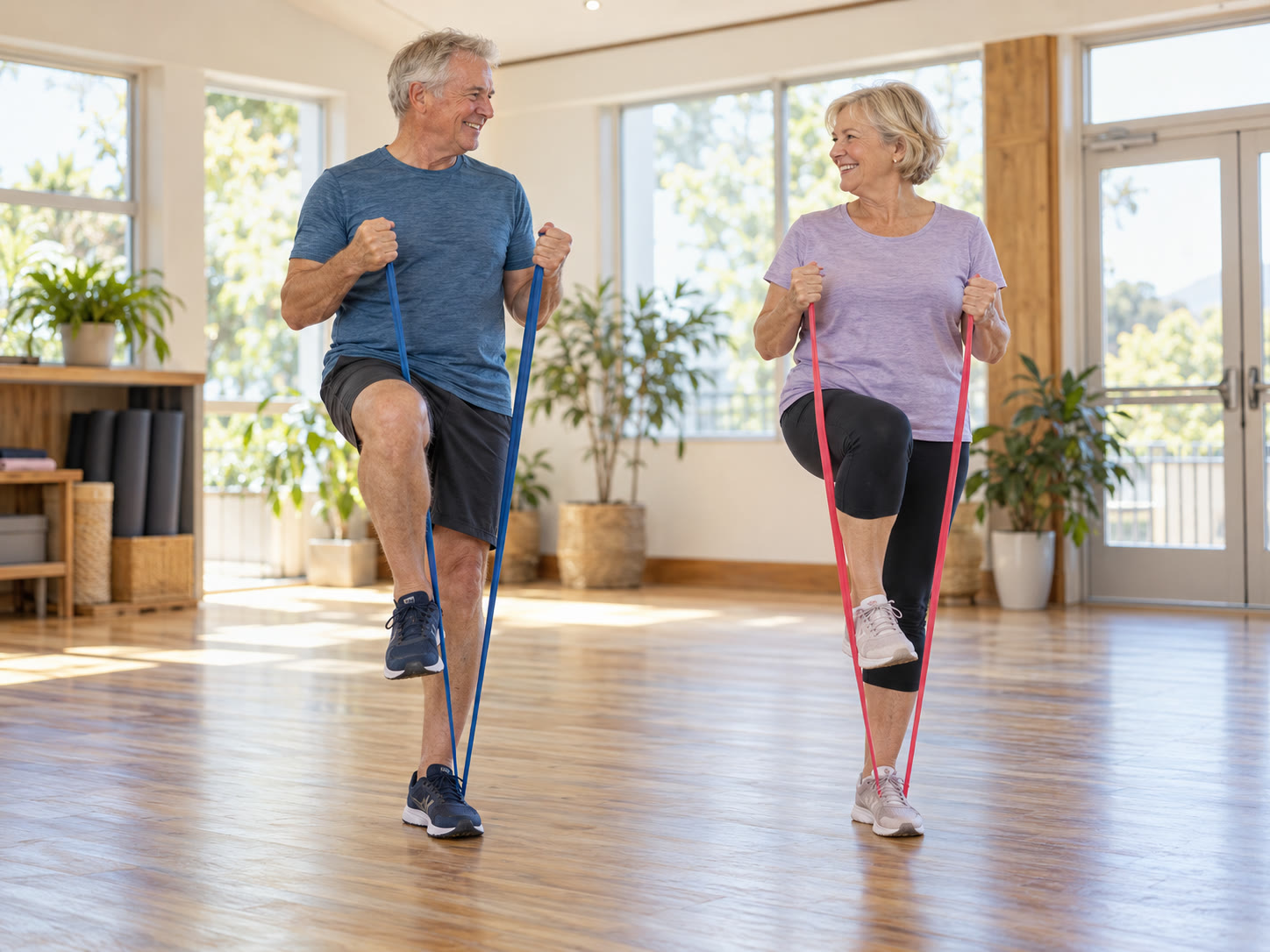
That might involve walking, resistance exercise, yoga, swimming, cycling, gardening or something else entirely. The best form of movement is often the one you will actually keep doing.
Movement does not need to look like exercise
Some people love structured exercise. Others do not. That is fine. Movement can be built into life in many ways:
Walking to get coffee
Gardening or practical jobs around the house
Cycling to visit someone
Taking the stairs
Swimming, dancing, golf or hiking
Walking the dog
Stretching or joining a class
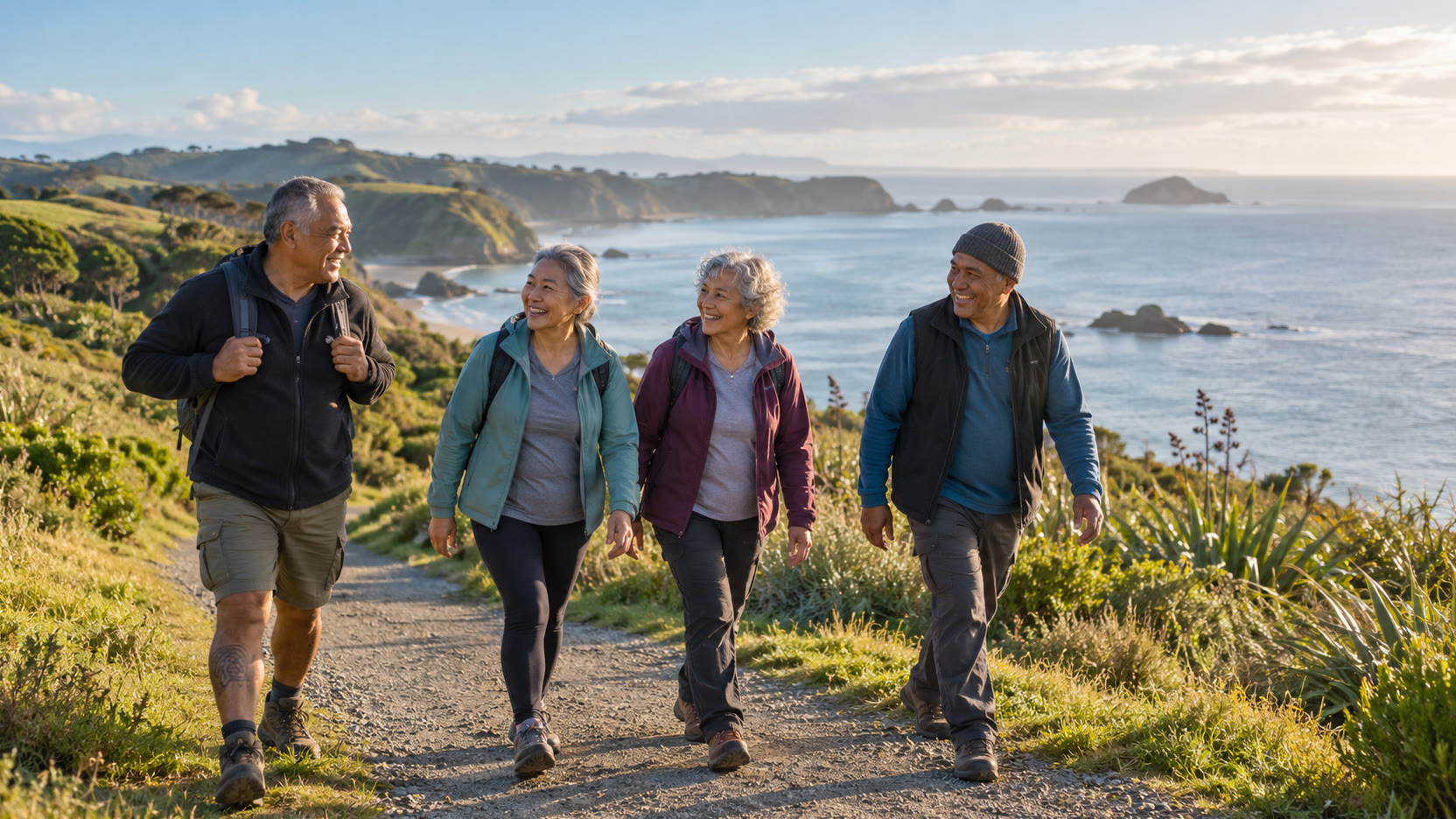
Meeting a friend for a walk rather than always sitting over coffee
The important thing is not whether it looks impressive. It is whether movement remains part of ordinary life.
A retirement that includes natural movement may be easier to sustain than one that depends entirely on motivation.
Wellbeing can be ordinary, social and built around movement you genuinely enjoy.
Energy often likes rhythm
One of the interesting things about having more free time is that it can make routines feel less necessary. But simple routines often help support energy.
Waking at roughly similar times
Moving early in the day
Having something to get up for
Eating regularly
Spending time outside
Seeing people
Getting enough rest
Having both activity and recovery in the week
The aim is not rigid scheduling. It is enough rhythm to stop the days becoming completely shapeless.
This connects directly with another part of retirement life: Time & Structure. Wellbeing and routine often reinforce each other. When the week has some shape, movement and social contact are more likely to happen. When you feel better, it becomes easier to engage with the week.
Rest matters too
A meaningful retirement does not need to be relentlessly active. There is no prize for filling every day.
Reading.Sitting in the garden.Having a slow morning.Taking an afternoon nap.Watching something you enjoy.Simply having nowhere to be.
The important distinction is between chosen rest and drift.
Chosen rest feels restorative. Drift can sometimes leave you feeling flatter than before.
Does this leave me feeling restored, or merely inactive?
You do not need to answer perfectly. Just notice.
Sleep can shape more than the night
When work ends, sleep routines can change. No early commute may mean staying up later. Mornings become more flexible. That freedom can be enjoyable.
But sleep also affects how the rest of the day feels. When you are well rested, it is usually easier to:
Move
Concentrate
Socialise
Make decisions
Feel motivated
Enjoy activities
Again, the answer is not to impose a strict working-day routine on retirement. It is to notice what kind of rhythm helps you feel at your best.
Food is part of everyday quality of life
Retirement can change the way people eat too. You may have more time to cook. You may eat out more. Lunch can become social. Travel can change routines. One person may suddenly be home for meals that used to happen separately.
Food is not only about nutrition. It is also about:
Pleasure
Social connection
Culture
Routine
Independence
Hospitality
Enjoyment
That is worth preserving. A healthy relationship with food does not need to mean turning every meal into a calculation. For many people, it is simply about making everyday choices that support both enjoyment and energy.
Social connection is part of wellbeing
Health and wellbeing are not only physical. Who you see matters too.
Work may have provided regular contact for years. After retirement, that contact may reduce quickly. A week can become quieter than expected. That can affect energy in its own way.
Some people feel more motivated when they have:
Someone to walk with
A class to attend
A regular coffee
A group activity
Volunteering
Family commitments
A shared hobby
Connection can support movement. Movement can support connection. Again, the different parts of retirement life overlap.
Wellbeing should support your life - not become your life
There is another trap worth avoiding. Once people have more time, health can sometimes become an enormous project. Tracking everything. Optimising everything. Worrying about every meal. Measuring every step. Reading endlessly about ageing.
For some people, that is motivating. For others, it can make life feel smaller rather than bigger.
Look after your wellbeing so you can live your life - not so wellbeing becomes the whole purpose of it.
The goal is capacity. More energy for what matters. More confidence in what your body can do. More ability to keep participating in life.
Start with what you want to keep doing
A practical way to think about wellbeing is to begin with lifestyle rather than rules.
What do I want to still be able to do five or ten years from now?
Perhaps your answer is to travel comfortably, stay in your home, play with grandchildren, walk around cities, keep cycling, continue gardening, play tennis, volunteer, keep working occasionally or go on long walks with your partner.
Then work backwards. What might help support that?
Walking regularly
Keeping up strength
Maintaining mobility
Sleeping well
Staying socially connected
Making time for recovery
Eating in a way that supports steady energy
The point is not perfection. It is continuity.
Try making wellbeing part of the week you actually want
Instead of creating a separate “health plan”, imagine your ideal ordinary retirement week. Where does wellbeing already fit naturally?
Monday morning walk
Tuesday lunch with friends
Wednesday strength session
Thursday gardening
Friday cycle with your partner or a friend
Weekend family time
One completely quiet morning
That feels less like a programme. And more like life. Which is exactly the point.
What gives you energy - and what drains it?
Physical wellbeing is only part of the energy equation. Some things energise us emotionally. Others quietly drain us.
You may feel more alive after
Seeing certain friends
Helping someone
Being outdoors
Making something
Learning
Exercising
Travelling
Being part of a group
Finishing a project
You may feel flatter after
Too much unstructured time
Too much isolation
Overcommitting
Spending long periods sitting
Saying yes to things you do not really enjoy
Having no plans at all
Paying attention to those patterns can be useful. Not everything that looks restful is restorative. Not everything that looks demanding is draining. Sometimes the opposite is true.
A few questions worth asking
You might reflect on:
What do I want my health and energy to make possible?
What activities do I want to keep doing as I get older?
Which kinds of movement do I genuinely enjoy?
What gives me energy?
What consistently drains it?
How much routine helps me feel better?
Am I getting enough rest, or simply spending more time inactive?
Which people help me feel more engaged with life?
What could I build into an ordinary week now that would still serve me later?
You do not need to change everything. One small habit that fits your life is often more useful than an ambitious plan you abandon.
Wellbeing is part of the bigger retirement picture
At NEXTFUL, we think about retirement as a connected life transition. Your health and wellbeing influence how you use your time, what activities feel possible, how independent you feel, whether you stay socially connected, how much you can contribute and whether you can pursue the experiences you still want.
And the reverse is true too. Purpose, connection, routine, relationships and lifestyle can all affect how well everyday life feels.
That is why wellbeing belongs naturally within the broader question:
What kind of life do I want to be able to live next?
You do not need to optimise yourself. You do not need to chase youth. You simply want enough strength, energy, connection and resilience to keep participating in the life you care about.
Retirement may give you more time. Wellbeing helps you make something of it.